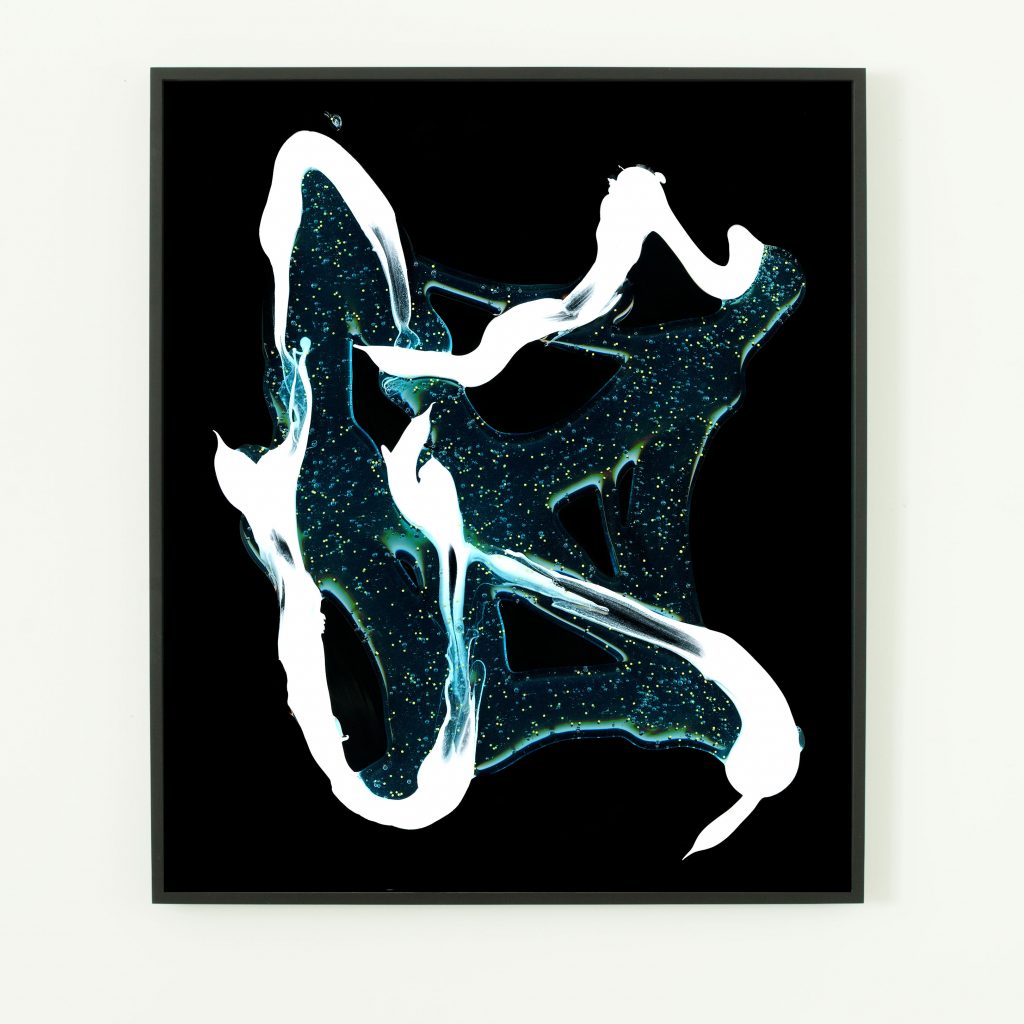
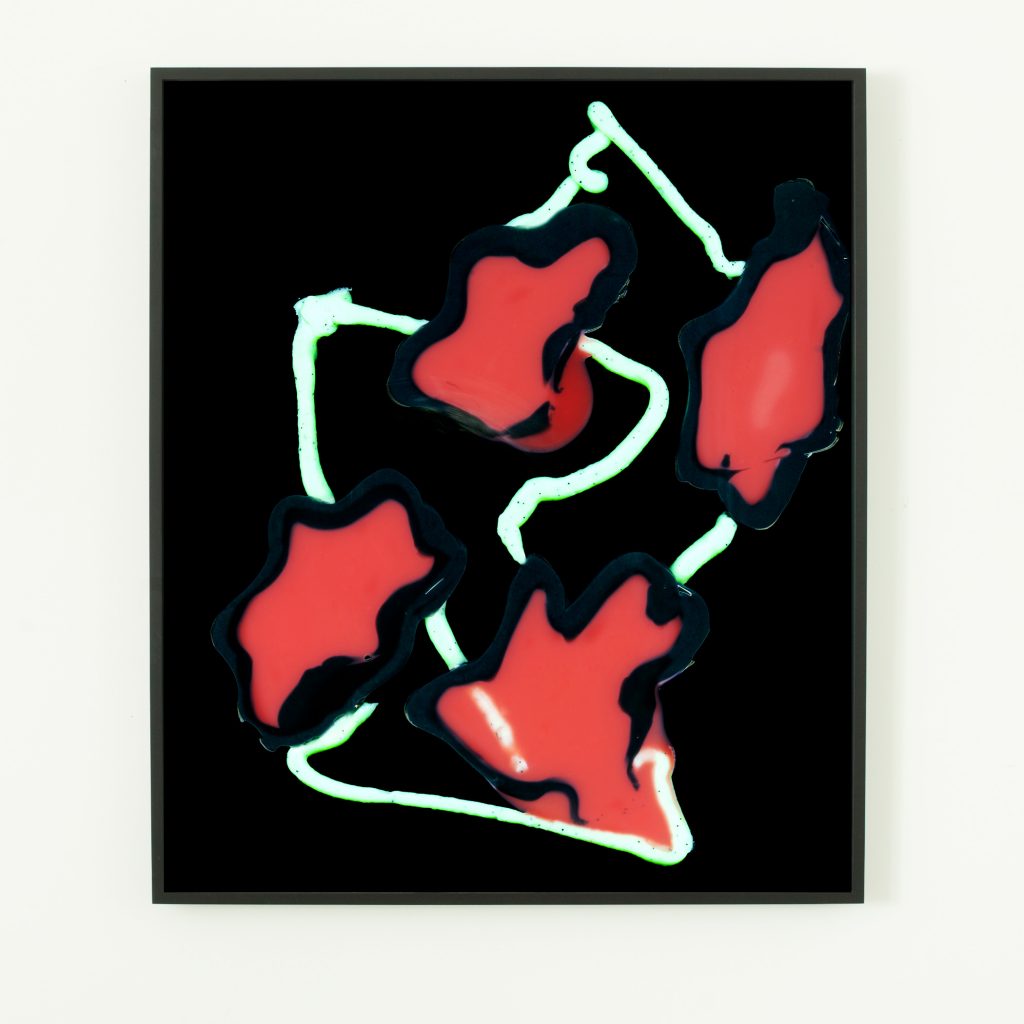
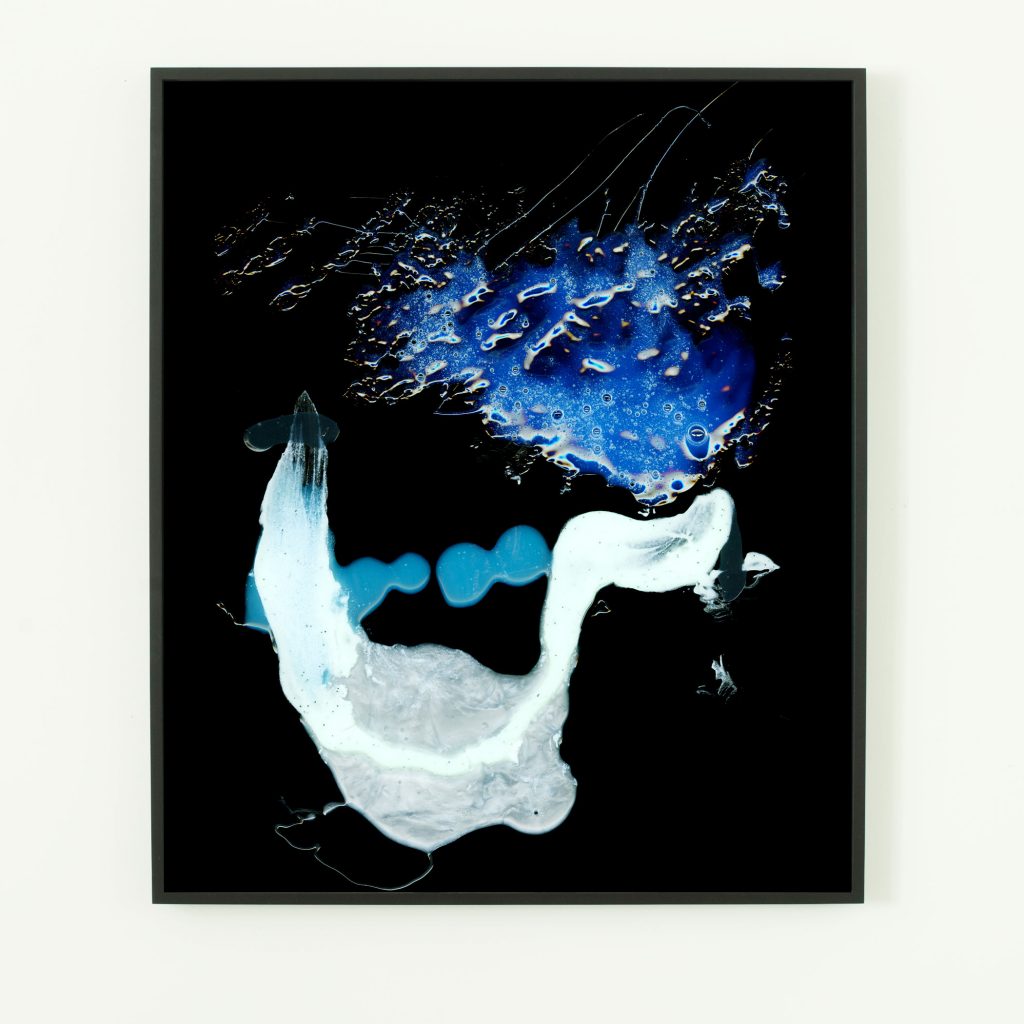
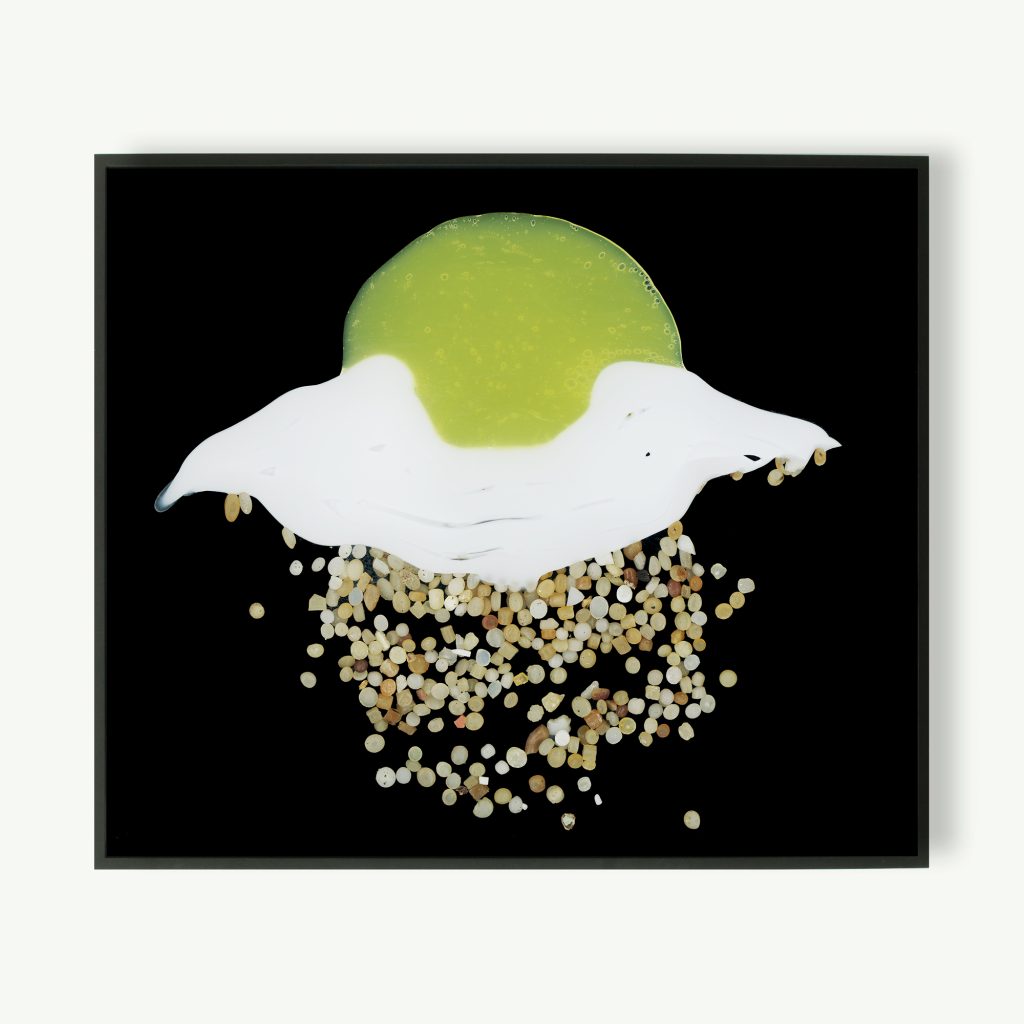
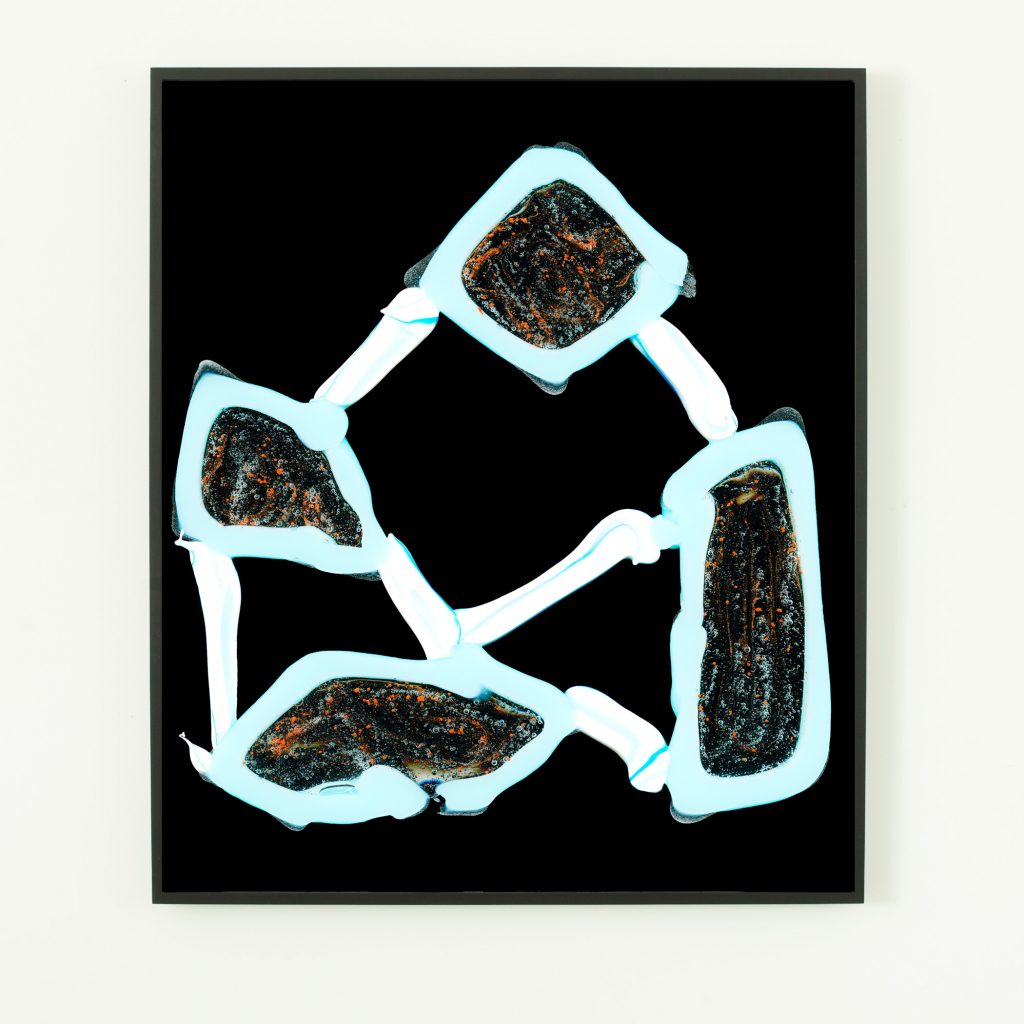
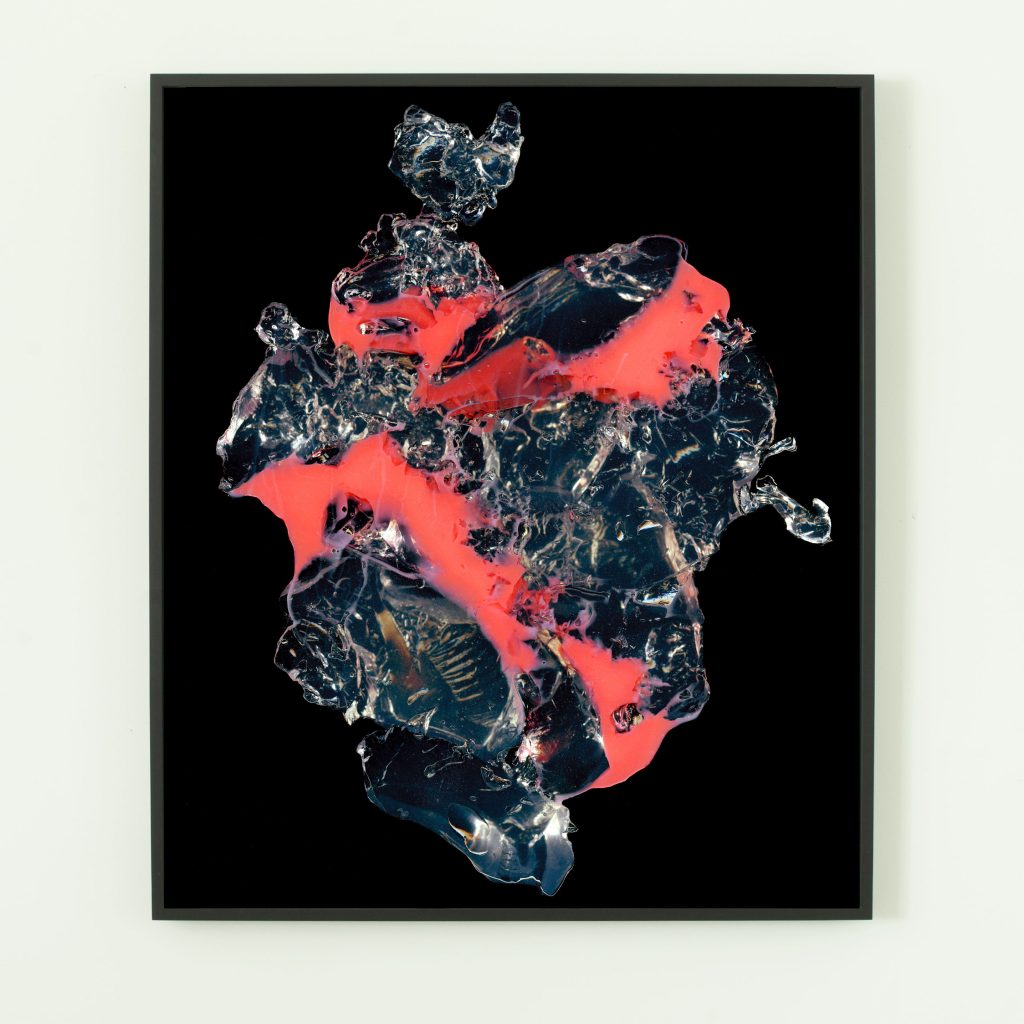
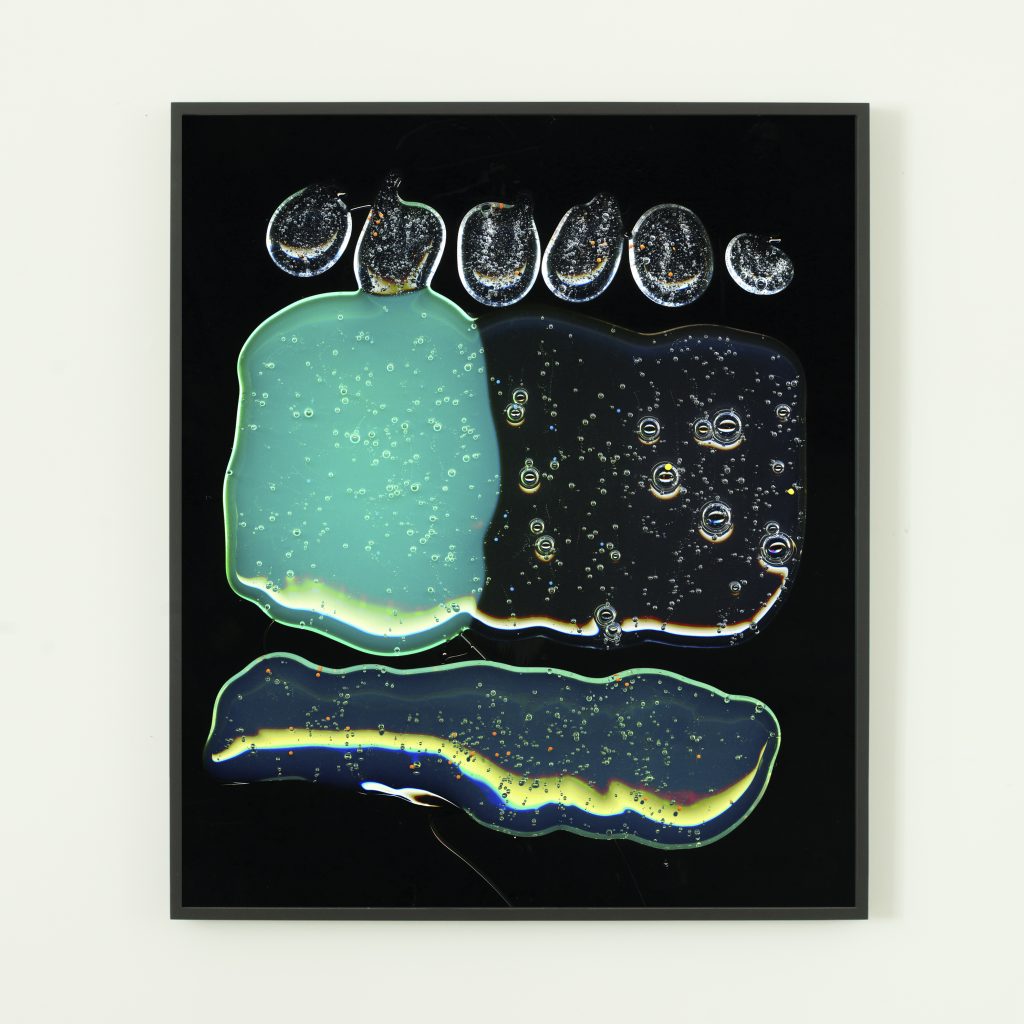
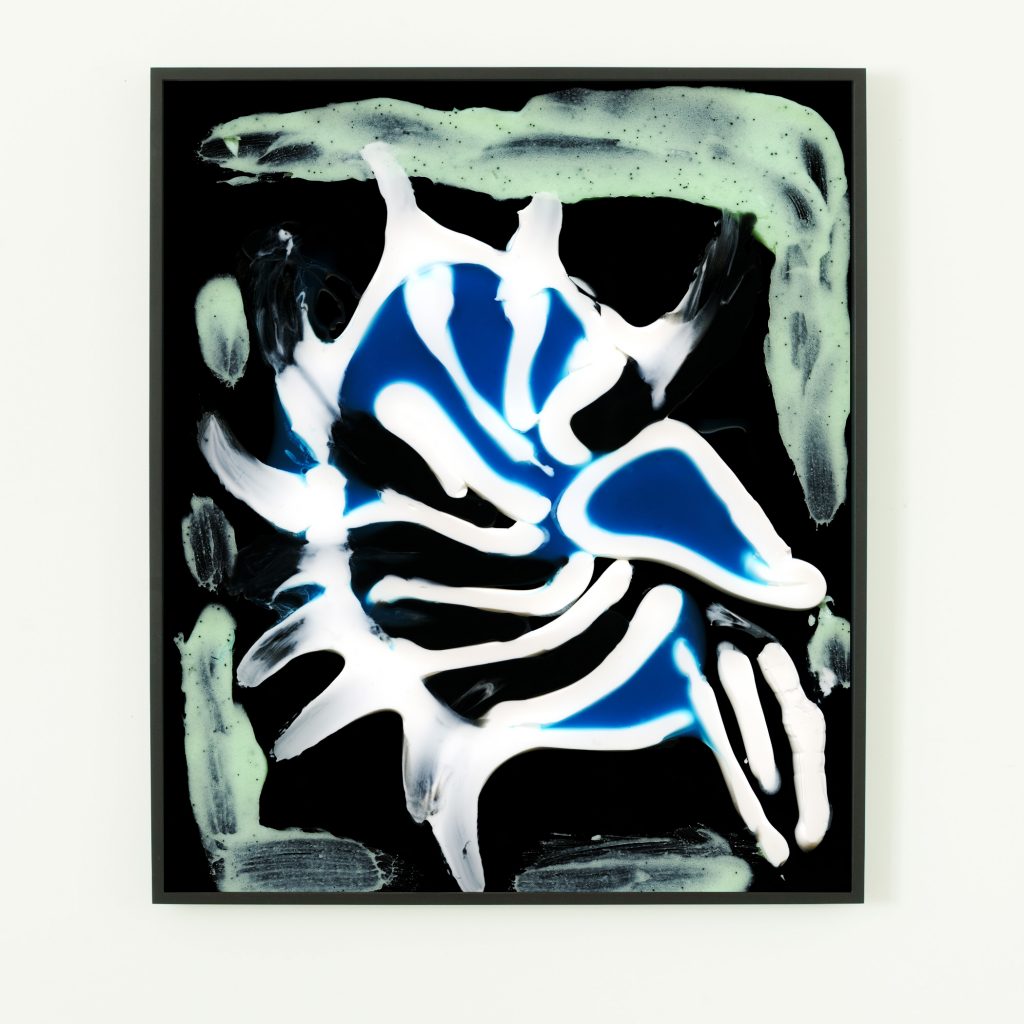
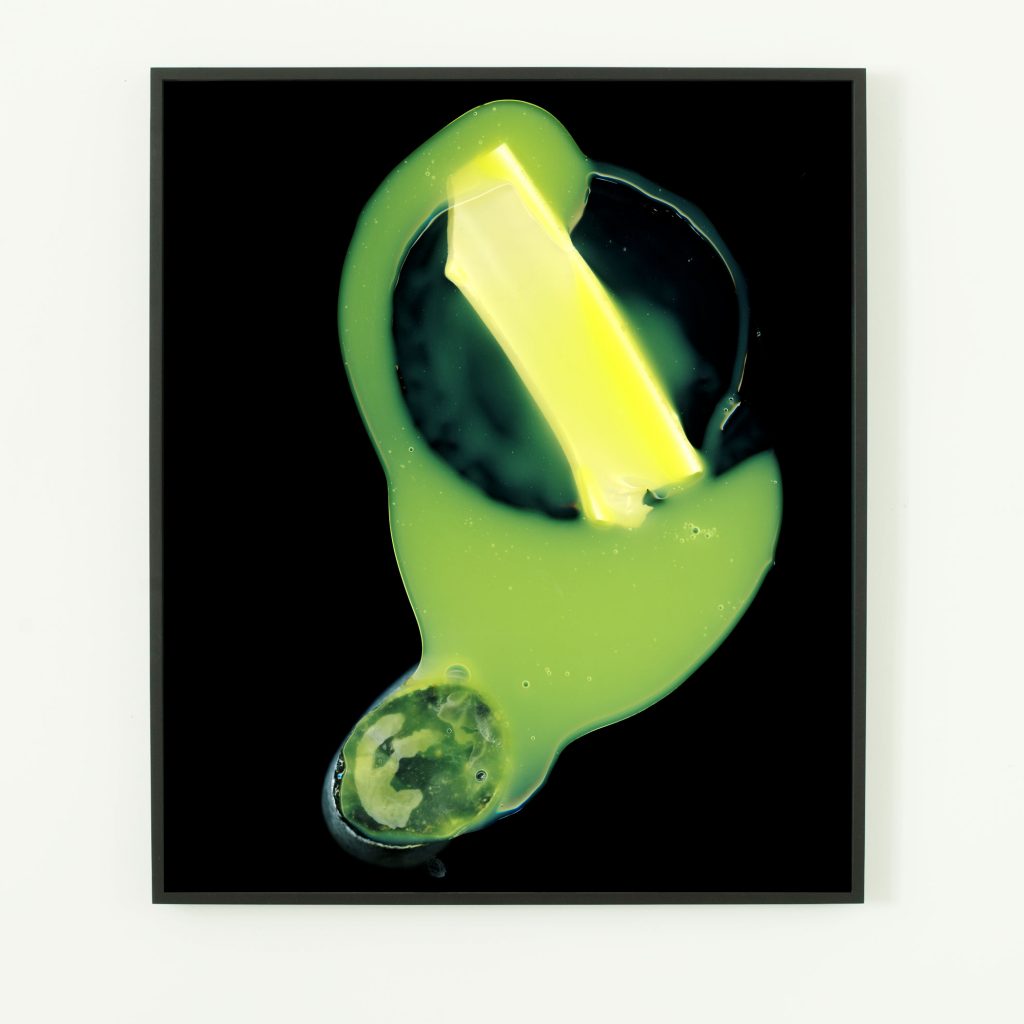
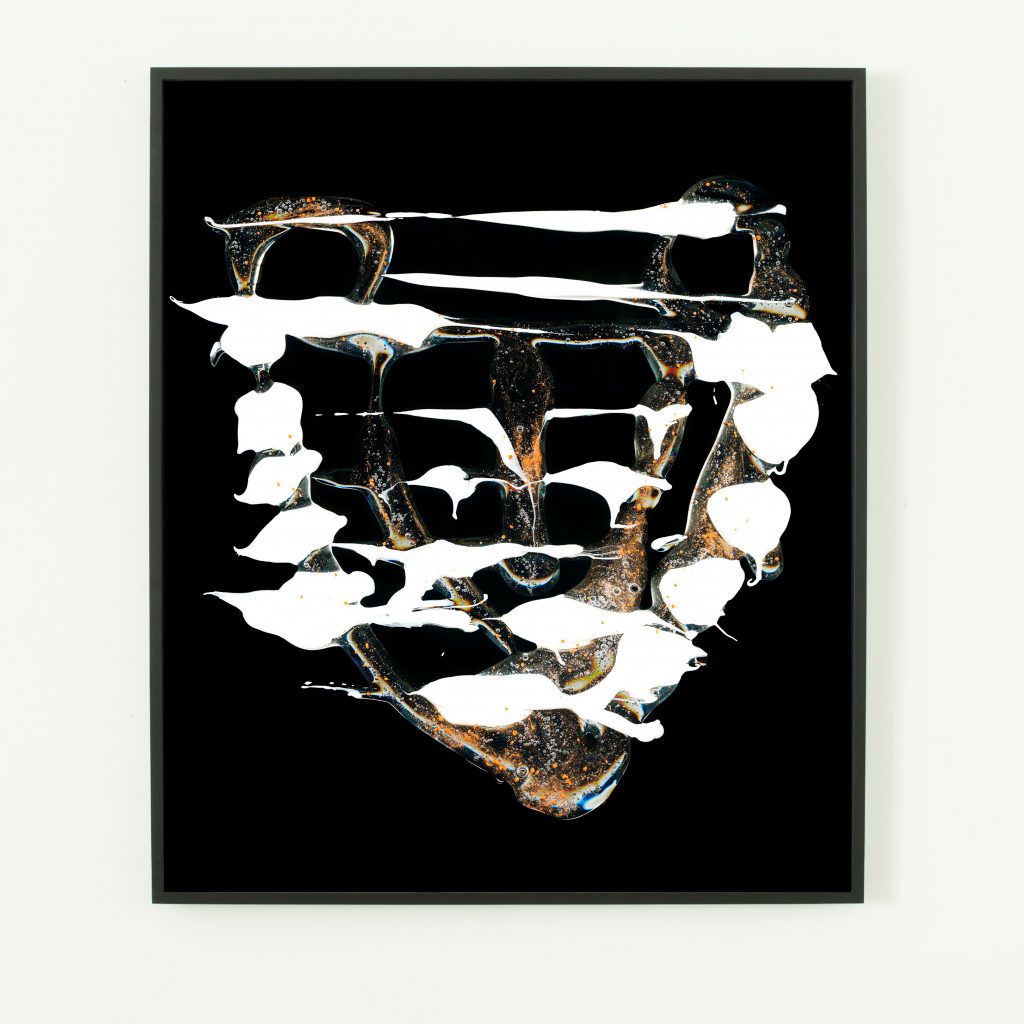
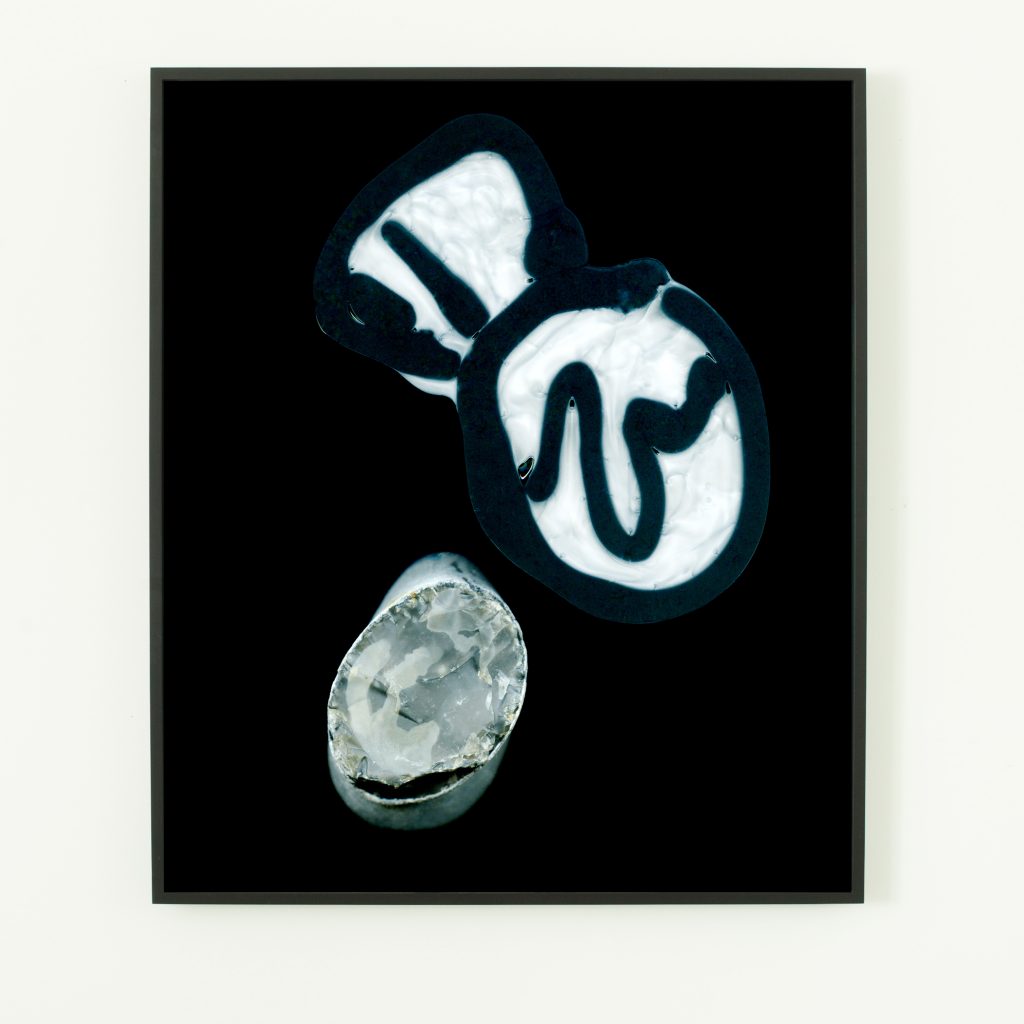
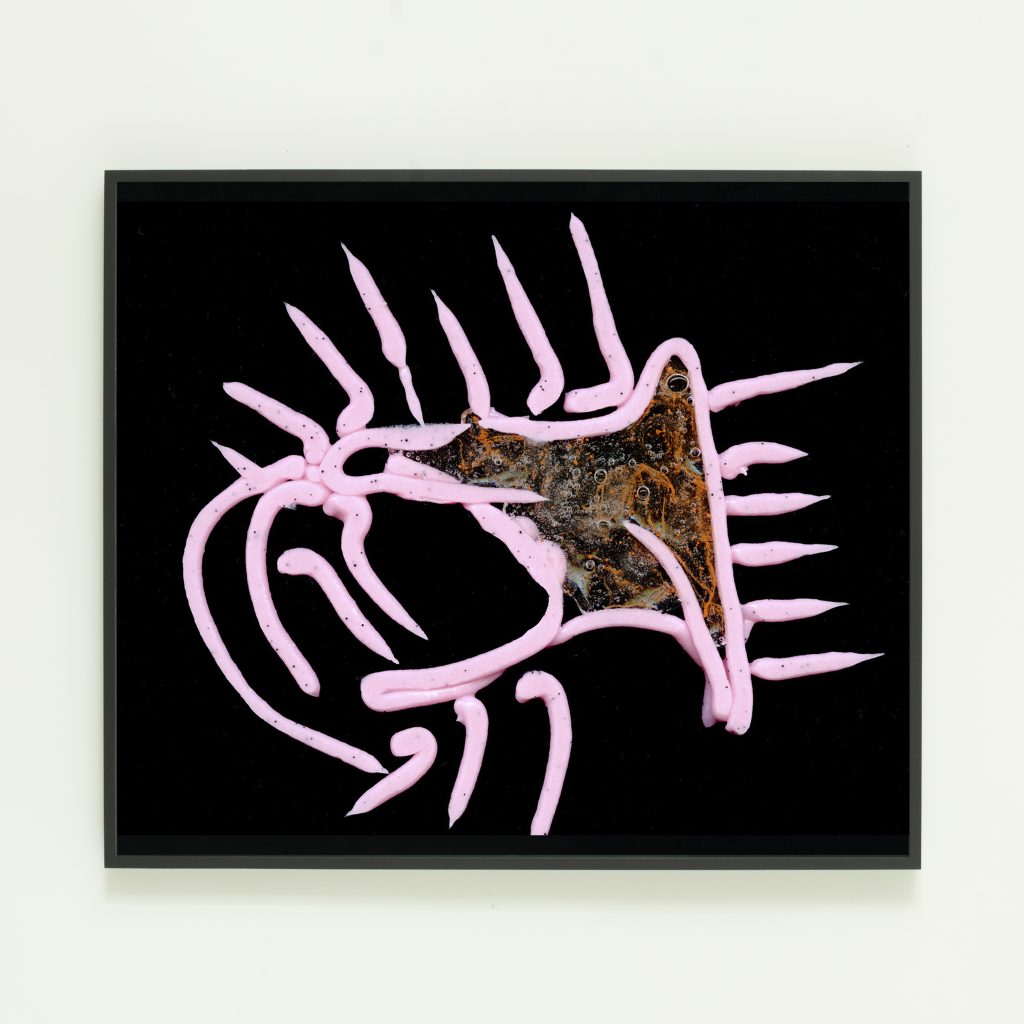
Otherwise invisible air bubbles, shimmering particles and the microplastics contained in both the cosmetics and the sand samples come to light. In their abstractness and alienation, the formations inevitably evoke associations: microorganisms from the deep sea, amoebae and protozoa, ammonites and squid seem to emerge from the opaque darkness of the black background. Evoking the appearance of a scientic experiment, the ction of this microscopic underwater inventory simultaneously points to the real presence of the micro-particles depicted, which have long since permeated the oceans. In this investigation of the hidden inner life of cosmetic substances, ecological interdependencies, concepts of interspecies relationships and projections of "nature" literally seem to merge.
Seeliger's works thus point to a paradox that seems to be inherent in human behaviour in relation to our own perception of the oceans: on the one hand, their barely explored depths serve us as a synonym for the deep unconscious, as a romantic metaphor of sublimity, as a projection surface for idealized ideas of untouched nature. In fact, the oceans have long since become the key space of globalization and, as a biotic mass, are already marked down to the microscopic level by traces le behind by mankind. Plastic is even found at their deepest points, such as the Mariana Trench. Seeliger's use of cosmetics brings our own skin - our outer
boundaries, our interface - metaphorically close to the more far-reaching question of permeability and contact present here: from the uid transitions between artistic media and research areas to the unstoppable penetration of nature by human inuence.
deep